Kingman & Golden Valley, AZ · updated 2026-08-26
Wood privacy fence installation in Kingman, AZ
A 6 ft wood privacy fence typically runs $25–$55 per linear foot as of 2026-08-26 — the classic full-privacy option, at the cost of more upkeep than vinyl under Kingman's sun.
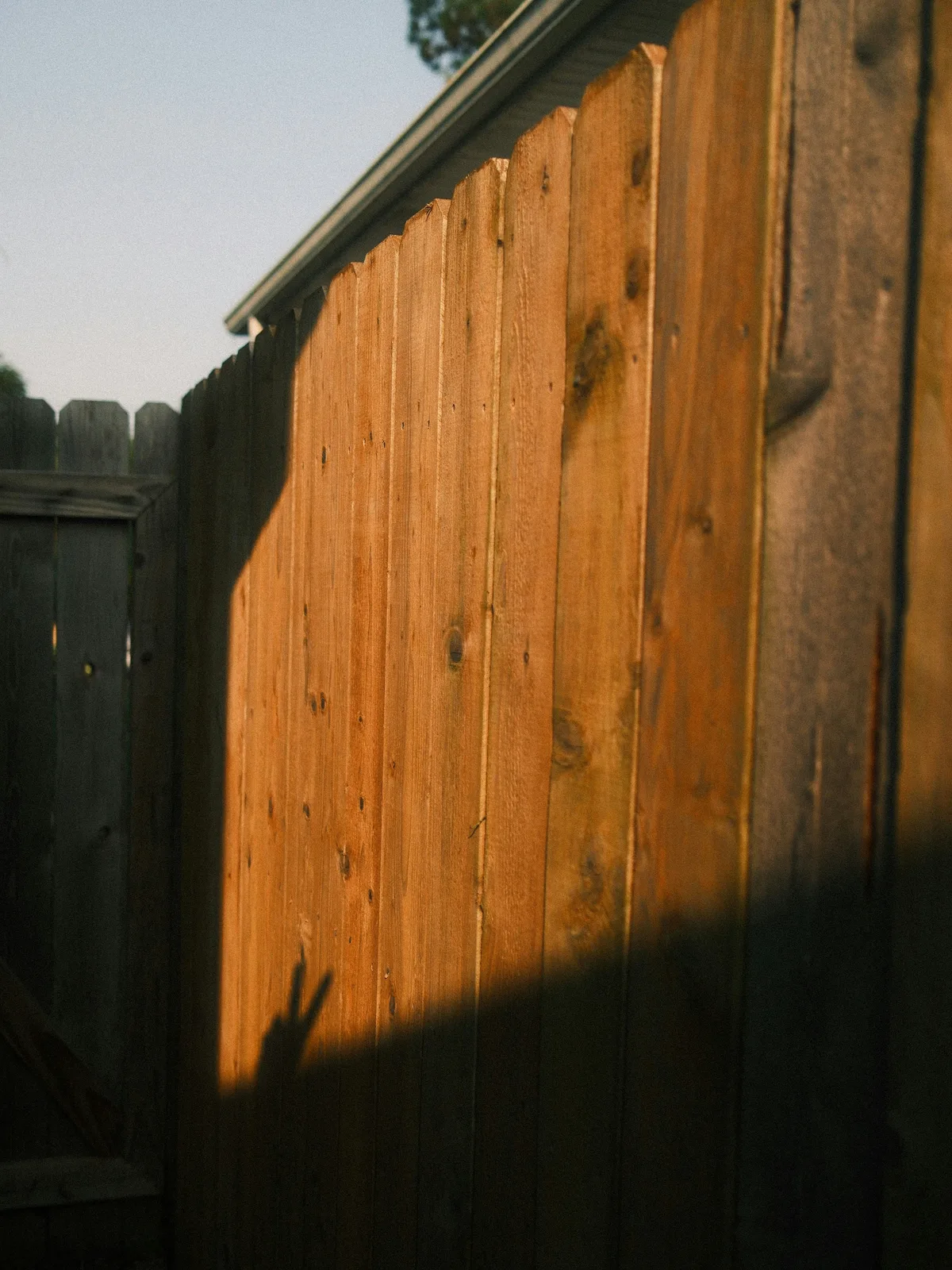
Where wood fits
Wood privacy fencing gives full visual privacy and a classic look at a lower upfront cost than vinyl or wrought iron, and individual boards can be repaired without replacing an entire panel. The tradeoff is maintenance: Kingman's intense UV exposure bleaches and dries unsealed wood noticeably faster than in milder climates, and boards can warp, cup, or crack if sealing/staining isn't kept up on a regular schedule — plan on resealing every couple of years rather than treating it as a one-time step.
Cost
Installed, per linear foot (6 ft privacy)
$25–$55
Board-on-board or lattice-top styles cost more than a standard privacy panel. Whole-market figures are published inconsistently by the source — see the note below.
See the full cost guide for how wood compares to vinyl, chain link, and wrought iron.
Height rules
Wood is a solid fence for zoning purposes. Inside Kingman city limits that's a 3 ft cap in the front setback and 6 ft at the side/rear. In unincorporated Mohave County the front cap is 4 ft, and view-obscuring fencing (which a wood privacy fence is) needs to be at least 6 ft. See the full rules page for the complete breakdown. (KGM-016, KGM-011)
Keeping a wood fence in shape here
Reseal or stain on a regular schedule — sun exposure here works faster than in milder climates — and check post bases periodically, since Mohave County's caliche soil drains differently than typical topsoil and can affect how a footing weathers over years of freeze-free but temperature-swinging conditions.
Species and treatment: the choice that sets everything else
"Wood fence" covers materials that behave very differently under this much sun, and the species decision drives both the price and how much of your weekends the fence will claim.
Cedar and redwood
Naturally more resistant to decay and insects, more dimensionally stable, and better at holding a finish. They cost more up front and weather to a silver-grey if left unsealed — which some owners want and others discover by accident. In a high-desert climate the stability advantage matters more than the decay resistance, because the failure you actually see here is boards cupping and checking, not rotting.
Pressure-treated pine or fir
The budget option, treated for ground contact and insect resistance. It is entirely serviceable, but it moves more as it dries, which is exactly what Kingman's low humidity encourages. Ask whether the boards have been allowed to dry before installation and finishing — treated lumber installed wet and sealed immediately is a common source of warping that gets blamed on the climate.
Composite and vinyl-clad alternatives
Sold as wood-look products with far less upkeep, at prices that generally land above wood and near or above vinyl. If maintenance is the reason you are reconsidering wood, price vinyl in the same quote round rather than treating it as a separate decision.
Style changes the price more than people expect
All of these are "6 ft wood privacy fence" on a quote, and they are not the same amount of material or labor:
- Standard privacy / stockade. Boards butted edge to edge on one side of the rails. The baseline, and the cheapest.
- Board-on-board. Overlapping boards, so gaps stay closed as the wood shrinks. Roughly a third more material by board count, and it is the style that ages best in a dry climate for exactly that reason.
- Shadowbox. Boards alternating on either side of the rails. Looks finished from both sides — worth knowing if the neighbor is paying half — and lets some air through, which is a genuine wind advantage over a fully solid face.
- Lattice top or decorative cap. Adds height and detail. Also adds sail area at the top of the fence, where leverage on the posts is greatest.
When comparing quotes, confirm every bidder priced the same style. This is one of the more common reasons two wood quotes differ by more than they should.
The structure under the boards
A wood privacy fence is a solid face on an exposed lot, which makes it the material most dependent on what you cannot see. Three specifications carry it:
- Post material. Wood posts fail at grade, where soil, irrigation, and sun meet. Steel posts sleeved or bracketed behind a wood fence keep the look and move the structural job to something that does not rot — a common and sensible upgrade here, and worth pricing as an option.
- Rail count. Two rails is standard on a 6 ft fence; three meaningfully reduces how much each board can work loose and cup on its own. Cheap, and it shows up years later.
- Fasteners. Ring-shank or screw fastening holds through the seasonal movement that low humidity drives; smooth nails back out. Ask what is being used.
Post depth, hole diameter, and post spacing matter more than any of the above — high-desert wind and your fence covers why, and what to ask each bidder in writing.
Sealing: the schedule that actually applies here
Wood's real cost is not on the quote. Intense UV breaks down the surface of unsealed wood faster than in milder climates, and once boards have dried, cupped, and checked, no finish reverses it — sealing is preventive, not restorative.
A workable approach: let a new fence dry out before the first finish rather than sealing it wet, use a penetrating stain with UV blockers rather than a surface film that can peel in this sun, pay particular attention to board end-grain and the bottoms where moisture and dust collect, and re-coat on a schedule instead of waiting for the fence to look bad. Reasonable people disagree on the interval; nobody who owns a wood fence here thinks the answer is "never."
Also watch the gate. It carries more cycles and more torque than any other part of the fence, and a gate that has stopped closing squarely is usually the first sign that a post is moving — a cheap fix now, and an expensive one later. See the fence repair page.
A note on the wood cost data
The $25–$55 per foot figure above is specifically for a 6 ft wood privacy fence, installed, from Ergeon's dataset of 41,420 wood-fence installations updated July 2026. Worth stating plainly: the same source publishes two different whole-market ranges on the same page — $32–$62 in its headline and $44–$67 in its detail section — drawn from those same records.
We lead with the 6 ft privacy figure because it is the specific, unambiguous one and it is the fence most people on this page are actually pricing. The whole-market ranges cover every wood style from split rail to lattice-topped board-on-board, which is part of why they run higher and disagree with each other. Flagging a source's internal inconsistency is more useful than quietly picking whichever number reads better. Ranges are compiled from published 2025–2026 Kingman-specific and Arizona cost sources, labelled with how local each source actually is. They are research, not a quote. Verified 2026-08-26.
Full sourcing for every material: the Kingman fence cost guide.
Common questions
How much does a wood privacy fence cost in Kingman, AZ?
A 6 ft wood privacy fence typically runs $25–$55 per linear foot for materials and labor as of August 2026, The same source publishes two different whole-market ranges on one page ($32–$62 and $44–$67, median about $43–$54) covering every wood style, so this site leads with the specific 6 ft privacy figure. Board-on-board or lattice-top styles run toward the higher end.
Does wood hold up in Kingman's climate?
Kingman's intense high-desert sun bleaches and dries untreated wood faster than milder climates, and boards can warp or crack without regular sealing. Wood is a good choice if you're willing to reseal or stain on a periodic schedule; if low maintenance matters more, vinyl is worth comparing.
How tall can a wood privacy fence be in Kingman?
As a solid fence, wood is capped at 3 feet in the front setback and 6 feet at the side/rear inside Kingman city limits. In unincorporated Mohave County, front yards are capped at 4 feet and view-obscuring fencing (which a wood privacy fence is) needs to be at least 6 feet. (KGM-016, KGM-011)
How long does a wood fence last in Kingman?
Long enough that the honest answer is a range rather than a number, because it depends almost entirely on three things you control: whether the posts are wood or steel, whether the footings went through the caliche layer or stopped at it, and whether the fence gets resealed on a schedule. A wood fence on steel posts with deep footings and regular sealing outlasts one on shallow wood posts by a wide margin, and both were quoted as "a 6 ft wood privacy fence." This site does not publish a lifespan figure because no sourced local dataset exists for one.
Free · no obligation
Get a wood privacy fence quote
Tell us your footage and style and your request goes to an independent, licensed Arizona fencing company serving Kingman or Golden Valley.
Serving Kingman and Golden Valley, Arizona.