Kingman & Golden Valley, AZ · updated 2026-08-26
Wrought iron & ornamental fence installation in Kingman, AZ
Installed wrought iron runs $50–$85 per linear foot as of 2026-08-26, with aluminum as a $25–$75/ft rust-resistant alternative — the strongest curb-appeal option, and often required around a pool.
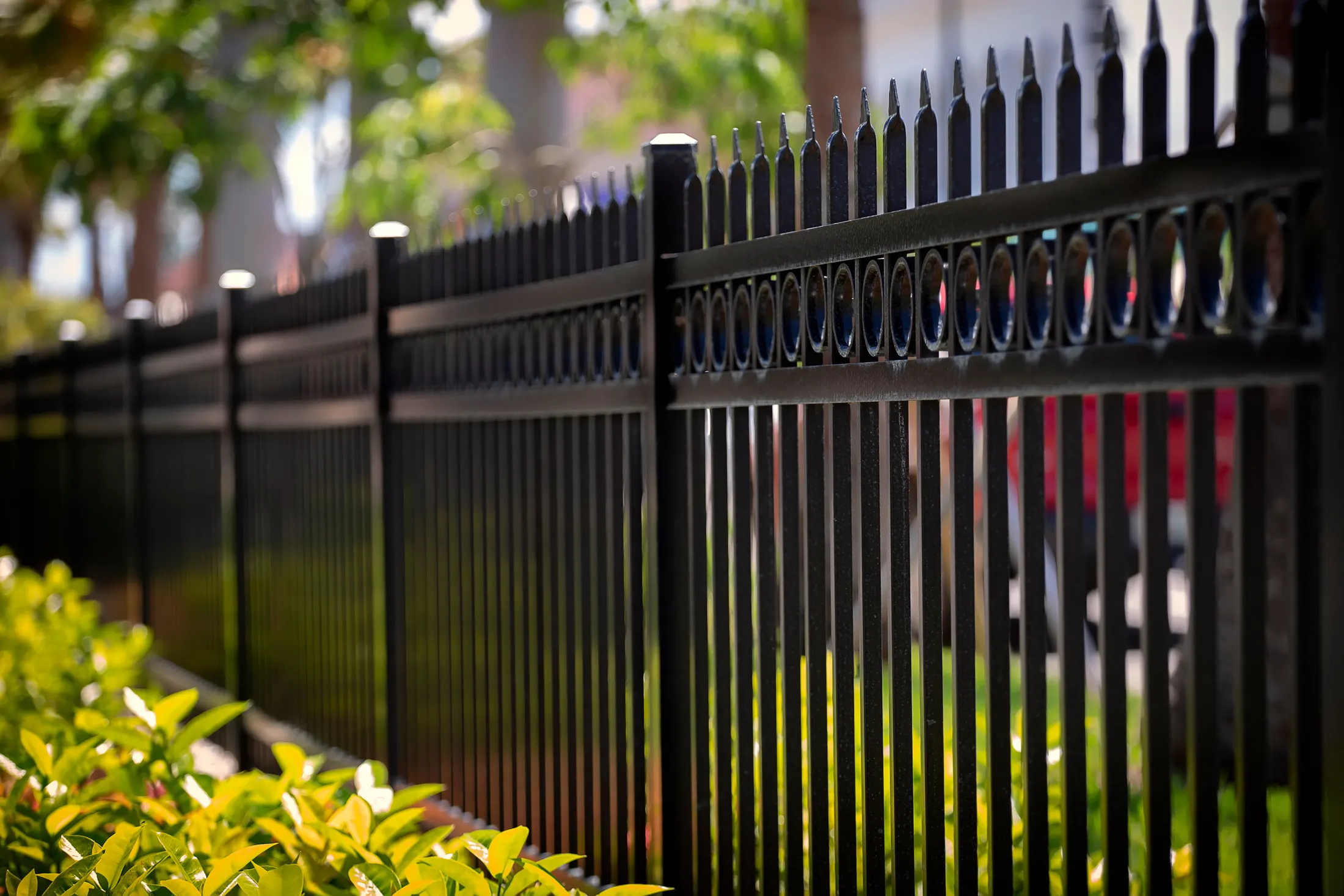
Where wrought iron and aluminum fit
Ornamental metal fencing doesn't provide privacy, but it offers the strongest curb appeal of the common materials and, because it's an open-picket style, doesn't catch wind the way a solid panel fence does — a real advantage in an exposed high-desert location. Wrought iron is the heavier, more traditional option; aluminum delivers a very similar look at a lower cost and with much better resistance to rust, which matters more here than it might seem given Kingman's monsoon-season humidity swings against otherwise dry, hot summers.
Cost
Wrought iron, installed per linear foot
$50–$85
A ~200-ft project typically totals $10,000–$17,000.
Aluminum, installed per linear foot
$25–$75
Budget-friendly alternative with a similar ornamental look and much better rust resistance.
See the full cost guide for how these compare to chain link, wood, and vinyl.
Pool fence requirements
Ornamental metal is a common choice around a pool because it satisfies the required barrier without blocking sightlines. Arizona state law sets the baseline; Kingman adds its own setback on top.
Arizona state law · A.R.S. §36-1681
- Barrier at least 5 feet tall
- No opening large enough to pass a 4-inch sphere
- Barrier at least 20 inches from the water's edge
- Gate opens outward, self-closing/self-latching, latch ≥54 inches above ground (or padlock/keyed lock)
(AZ-011)
City of Kingman · §3-80.580
- Pool/spa water's edge must sit outside the front yard
- At least 4 ft from the property line (single-family/manufactured-home zones)
(KGM-016)
Full detail on both rules: rules & permits page.
General height rules
Decorative wrought iron can reach 4 feet in the front setback inside Kingman city limits (the same front-yard allowance as chain-link with no slats); side/rear is 6 feet. In unincorporated Mohave County the front cap is 4 feet. (KGM-016, KGM-011)
Iron or aluminum: the comparison that decides most jobs
These two look alike from the sidewalk and behave differently in almost every other respect. For most residential fencing in this area, aluminum wins on the merits; iron wins where mass and strength are the point.
| Wrought iron | Ornamental aluminum | |
|---|---|---|
| Installed per ft | $50–$85 | $25–$75 |
| Rust | Will rust wherever the finish is breached | Does not rust |
| Upkeep | Inspect and touch up the finish; treat rust early | Essentially none beyond rinsing |
| Strength | Heavier; better for security applications | Adequate for residential; dents rather than bends |
| Repair | Can be welded and re-worked | Usually a section replacement |
| Customization | Fabricated to almost any design | Manufactured panel systems, fewer bespoke options |
The rust question deserves a word, because "it's dry here, so rust isn't an issue" is only half true. Kingman gets monsoon-season moisture against otherwise hot, dry conditions, and it is that cycling — plus irrigation spray, and dust holding moisture against a finish — that finds the breaches in an iron fence's coating. The failure starts small and at ground level, which is where nobody looks.
Finish is most of the lifespan
With ornamental metal, what is on the metal matters as much as the metal. Questions worth asking:
- Powder coat or wet paint? Powder coating is baked on, thicker, and far more durable in sustained UV than brushed or sprayed paint. It is the standard on manufactured aluminum systems and worth specifying on iron.
- What happens at cut ends and welds? On a fabricated iron fence, cuts and welds made on site break the factory finish. Ask how those are prepped and sealed — it is where corrosion starts.
- Is there a primer or galvanized layer under the finish? On iron, this is the difference between a fence that needs attention in five years and one that does not.
- What does the warranty actually cover? Many finish warranties exclude fading, or exclude corrosion at cut ends. Read that section specifically.
Once a year, walk the fence and look at the bottom few inches of the pickets and posts, on the side the sprinklers hit. That is the whole maintenance routine, and doing it is the difference between a touch-up and a section replacement.
Picket spacing, and getting a pool barrier right
The section above gives Arizona's barrier requirements. The specification that decides whether an ornamental fence meets them is picket spacing, because A.R.S. §36-1681 is written around whether an opening will pass a 4-inch sphere. Manufactured pool-rated panel systems are built to that; a decorative fence chosen for looks alone may not be. Ask the question in those words — "is this panel rated for a pool barrier?" — rather than asking whether it is "safe."
Four other details catch people out on pool enclosures:
- The gate does more work than the fence. It must open outward, away from the pool, and be self-closing and self-latching with the latch at least 54 inches above the ground. Self-closing hinges need adjusting over time — a gate that no longer latches on its own is no longer a barrier.
- Height is measured on the exterior side. Grade changes, planters, and anything climbable next to the fence all bear on whether the 5-foot requirement is really met.
- The 20-inch water setback is a separate requirement from the height and the sphere rule, and constrains where the barrier can run.
- Kingman adds its own rule on top. The pool or spa's water's edge must sit outside the front yard and at least 4 feet from the property line in single-family and manufactured-home zones — a setback rule layered on the state barrier rule, not a substitute for it. (AZ-011, KGM-016)
This page states the published requirements; it does not certify any specific installation. Confirm your barrier with City of Kingman Planning & Zoning at 928-753-8130 before you rely on it.
Why ornamental metal is the quiet winner on wind
An open-picket fence presents almost nothing for wind to push against. Where a 6 ft solid privacy fence lives or dies on its post depth and spacing, an ornamental fence of the same height is barely working its footings at all. On an exposed lot, that is a durability advantage that never shows up in a brochure — and it is a large part of why ornamental runs last as long as they do here.
It also means an ornamental fence keeps the view, which on a lot with a desert or mountain outlook is often the actual reason to choose it. The trade-off is stated plainly: no privacy at all. If you need both, the usual answer is ornamental where the view is and a solid material where the privacy is needed — see the material guide.
One more practical note: automatic gate operators fall inside the Arizona ROC fencing classification (R-14 / C-14 / CR-14), so a licensed fencing contractor is the right trade for a driveway gate and its opener. Verify the classification before signing — here is how. (AZ-006)
Gates are where the money and the trouble are
On an ornamental fence the panels are the easy part. Gates carry more cycles and more weight than anything else, and a driveway gate is effectively a separate project: wider leaves, heavier posts, deeper footings, and — if it is automated — power, safety sensors, and a control system. Ask for gates to be priced as their own line rather than folded into the per-foot rate, and ask specifically whether the gate posts are set differently from the line posts. They should be.
Common questions
How much does a wrought iron fence cost in Kingman, AZ?
Installed wrought iron runs $50–$85 per linear foot nationally as of August 2026 — a roughly 200-ft project typically totals $10,000–$17,000. Aluminum, a rust-resistant budget alternative with a similar ornamental look, runs $25–$75 per linear foot.
Is aluminum a good substitute for wrought iron?
For most homeowners, yes. Aluminum costs less and resists rust far better than iron in any climate, including Kingman's monsoon-humidity-meets-summer-heat cycling, while offering a very similar ornamental look. Iron's advantage is mainly a heavier, more traditional feel and greater strength for high-security applications.
Does Arizona require a pool fence?
Yes. A.R.S. §36-1681 requires a barrier at least 5 feet tall around most residential pools, with no opening large enough to pass a 4-inch sphere, set back at least 20 inches from the water's edge, and a self-closing, self-latching gate with the latch at least 54 inches above the ground. The City of Kingman separately requires the pool water's edge to sit outside the front yard and at least 4 feet from the property line. (AZ-011, KGM-016)
Free · no obligation
Get a wrought iron or aluminum fence quote
Tell us if it's for a pool enclosure or general fencing and your request goes to an independent, licensed Arizona fencing company serving Kingman or Golden Valley.
Serving Kingman and Golden Valley, Arizona.